![]() |
William Blake Illustrations_to_Robert_Blair's_The_Grave Friendship |
Friday, January 19, 2024
BLAKE & QUAKERS
Tuesday, March 8, 2022
SAILING TO AMERICA
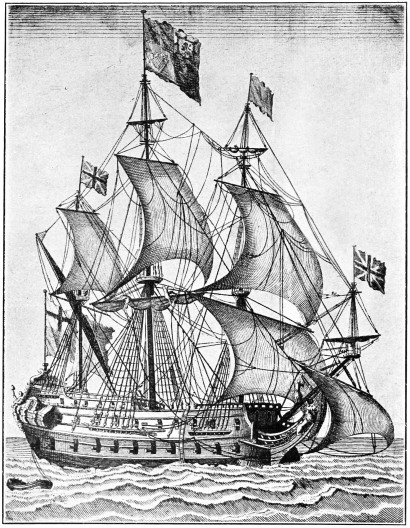
From John Smith’s Sea-Man’s Grammar (1694 edition)
THE JOURNAL OF GEORGE FOX
Edited with an Introduction
and Notes By
Rufus M. Jones
From the 1694 First Edition
CHAPTER XVIII.
Two Years in America.
1671-1673.
"In the afternoon, the wind
serving, I took leave of my wife and other Friends, and went
on board. Before we could sail, there
being two of the King’s frigates riding in the Downs, the captain of one of them sent his
press-master on board us, who took three of our seamen. This
would certainly have delayed, if not
wholly prevented, our voyage, had not the captain of the other frigate, being informed of the
leakiness of our vessel, and the length of our voyage, in compassion and much civility,
spared us two of his own men.
Before this was over, a
custom-house officer came on board to peruse packets and get
fees; so that we were kept from sailing
till about sunset; during which delay a very considerable
number of merchantmen, outward-bound,
were several leagues before us.
Being clear, we set sail in the
evening, and next morning overtook part of that fleet about
the height of Dover. We soon reached
the rest, and in a little time left them all behind; for our
yacht was counted a very swift sailer.
But she was very leaky, so that the seamen and some of the passengers did, for the most
part, pump day and night. One day they observed that in two
hours’ time she sucked in sixteen
inches of water in the well.
When we had been about three
weeks at sea, one afternoon we spied a vessel about four
leagues astern of us. Our master said it
was a Sallee
man-of-war, that seemed to give us chase. He said, “Come, let us go to supper, and
when it grows dark we shall lose him.” This he spoke to please and pacify the passengers, some
of whom began to be very apprehensive of the danger. But Friends were well satisfied in
themselves, having faith in God, and no fear upon their
spirits.
[When the sun was gone down, I saw out of my cabin the ship making towards us. When it grew dark, we altered our course to miss her; but she altered also, and gained upon us.]
[Note - A Moorish pirate ship, named from Sallee, a seaport of Morocco. This incident not only indicates Fox’s simple faith in God but it also is a good illustration of the way in which he inspired confidence in others. The captain believes in him.]
At night the master and others came into my cabin, and asked me what they should do. I told them I was no mariner; and I asked them what they thought was best to do. They said there were but two ways, either to outrun him, or to tack about, and hold the same course we were going before. I told them that if he were a thief, they might be sure he would tack about too; and as for outrunning him, it was to no purpose to talk of that, for they saw he sailed faster than we. They asked me again what they should do, “for,” they said, “if the mariners had taken Paul’s counsel, they had not come to the damage they did.” I answered that it was a trial of faith, and therefore the Lord was to be waited on for counsel.So, retiring in spirit, the Lord showed me that His life and power were placed between us and the ship that pursued us. I told this to the master and the rest, and that the best way was to tack about and steer our right course. I desired them also to put out all their candles but the one they steered by, and to speak to all the passengers to be still and quiet.
About eleven at night the watch called and said they were just upon us. This disquieted some of the passengers. I sat up in my cabin, and, looking through the port-hole, the moon being not quite down, I saw them very near us. I was getting up to go out of the cabin; but remembering the
word of the Lord, that His life and power were placed between us and them, I lay down again.
By this time the moon was quite down. A fresh gale arose, and the Lord hid us from them; we sailed briskly on and saw them no more.
The next day, being the first day of the week, we had a public meeting in the ship, as we usually had on that day throughout the voyage, and the Lord’s presence was greatly among us. I desired the people to remember the mercies of the Lord, who had delivered them; for they might have been all in the Turks’ hands by that time, had not the Lord’s hand saved them."
Acts.27
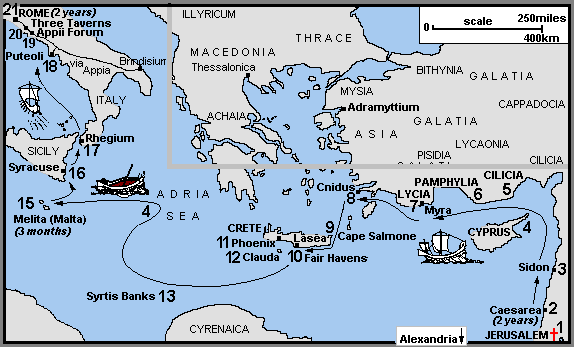
[1] And when it was determined that we should sail into Italy, they delivered Paul and certain other prisoners unto one named Julius, a centurion of Augustus' band.[2] And entering into a ship of Adramyttium, we launched, meaning to sail by the coasts of Asia; one Aristarchus, a Macedonian of Thessalonica, being with us.
[9] Now when much time was spent, and when sailing was now
dangerous, because the fast was now already past, Paul admonished
them,
[10] And said unto them, Sirs, I perceive that this voyage
will be with hurt and much damage, not only of the lading and
ship, but also of our lives.
[11] Nevertheless the centurion believed the master and the
owner of the ship, more than those things which were spoken by
Paul.
[18] And we being exceedingly tossed with a tempest, the
next day they lightened the ship;
[19] And the third day we cast out with our own hands the
tackling of the ship.
[20] And when neither sun nor stars in many days appeared,
and no small tempest lay on us, all hope that we should be saved
was then taken away.
[21] But after long abstinence Paul stood forth in the
midst of them, and said, Sirs, ye should have hearkened unto me,
and not have loosed from Crete, and to have gained this harm and
loss.
[22] And now I exhort you to be of good cheer: for there
shall be no loss of any man's life among you, but of the ship.
[23] For there stood by me this night the angel of God,
whose I am, and whom I serve,
[24] Saying, Fear not, Paul; thou must be brought before
Caesar: and, lo, God hath given thee all them that sail with thee.
[25] Wherefore, sirs, be of good cheer: for I believe God,
that it shall be even as it was told me.
[41] And falling into a place where two seas met, they ran
the ship aground; and the forepart stuck fast, and remained
unmoveable, but the hinder part was broken with the violence of
the waves.
[42] And the soldiers' counsel was to kill the prisoners,
lest any of them should swim out, and escape.
[43] But the centurion, willing to save Paul, kept them
from their purpose; and commanded that they which could swim
should cast themselves first into the sea, and get to land:
[44] And the rest, some on boards, and some on broken
pieces of the ship. And so it came to pass, that they escaped all
safe to land.
![]() |
Map in Phillips New Testament Paul's Journey from Caesarea to Rome |
[24] And, behold, there arose a great tempest in the sea, insomuch that the ship was covered with the waves: but he was asleep.
[25] And his disciples came to him, and awoke him, saying, Lord, save us: we perish.
[26] And he saith unto them, Why are ye fearful, O ye of little faith? Then he arose, and rebuked the winds and the sea; and there was a great calm.
Monday, February 14, 2022
GARDEN OF GOOD AND EVIL
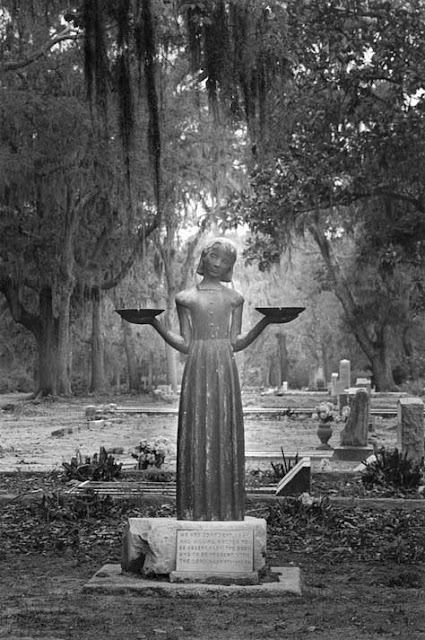
Bird Girl Telfair Museum Savannah, GA |
This statue was created by Sylvia Shaw Judson,the sculptor who sculpted the statue of Mary Dyer which appeared in an earlier post. For years the statue was in the Bonaventure Cemetery in Savanna Georgia. It was moved to a safer place after it gained fame through the movie Midnight in the Garden of Good and Evil which was set in Savanna.
| Cover Photo for novel Midnight In the Garden of Good and Evil |
"For Jack Leigh, his iconic moment came in 1994 when he was commissioned by Random House for the cover of John Berendt’s non-fiction novel Midnight in the Garden of Good and Evil. The book was about the repercussions that the murder of a local male prostitute and its subsequent trial that ensued. The titular “the garden of good and evil,” referred to Bonaventure Cemetery in Savannah, Georgia. Bredent suggested to Leigh to go to the cemetery for a suitable subject."
This post would not appear on this blog were it not that Sylvia Shaw Judson became a convinced Quaker in midlife. She was instrumental in beginning the Lake Forest Meeting
In a simple book of pictures and quotations Judson showed how art could evoke a state of mind which encouraged spiritual values. On the website of the Telfair Museum we read:
"In The Quiet Eye: A Way of Looking at Pictures (1982), Judson emphatically connected her Quaker beliefs to her aesthetic practices. She emphasized the term 'divine ordinariness,' which she defined as the 'delicate balance between the outward and the inward, with freshness and a serene wholeness and respect for all simple first-rate things, which are for all times and all people.'
These principles of simplicity, equality, and inwardness may very well have been applied to the work that we have now come to know as the Bird Girl. The young figure, plainly dressed, holds two bowls in either hand, which could be interpreted as a gesture of weighing and balancing. The overall simplicity of the composition, or its 'divine ordinariness,' helps explain its enduring charm; the sculpture reveals very little even after prolonged looking and retains an air of compelling mystery. Originally unassumingly titled 'Fountain Figure' (1936), the sculpture stood anonymously in Bonaventure Cemetery until it was featured on the cover of John Berendt’s bestseller Midnight in the Garden of Good and Evil (1994) and the subsequent Clint Eastwood film (1997)."
The image of the innocent child with arms outstretched, holding two vessels speaks of the choices we are constantly called to make. In the novel that became associated with the picture of the statue, the choice was presented as between good and evil. More often the choice is between self and others, or between following guidance or following the trend, or between truth and falsehood, or between any two things which lead us in opposite directions. The point is that we must choose; indecision is a choice also.
Yale University Art Gallery Grave of William Penn Edward Hicks 1847 |
Saturday, January 8, 2022
MONTEVERDE
Miami Meeting Friend Brad Stocker recently sent email noting that there is a PBS film which gives an account of the founding of the Friends Community in Costa Rica. Brad who occasionally visited the Gainesville Meeting and the Ocala Worship Group said in his email that Monteverde "has had an impact on my teaching, heart, and spiritual path."
The film is made available by Rocky Mountain PBS with the title Home Sweet Monteverde.
Let me know about your experiences with Monteverde.
https://video.rmpbs.org/video/sweet-home-monteverde-dh7gzy/
Friday, December 10, 2021
GOD IN US
| 1965 |
Joan Baez performing the song God Is God at the Chautauqua Auditorium in Boulder, CO on 7/15/09.
God Is God
Some folks see things not everybody can see.
And, once in a while, they pass the secret along to you and me.
Something sacred burning in every bush and tree.
We can all learn to sing the songs the angels sing.
Stood on mighty mountains and gazed across the wilderness.
Never seen a land with sand or a diamond in the dust.
Every day that passes I'm sure about a little bit less.
And I believe in God, and God in us.
Whether or not I believe doesn't matter at all.
I receive the blessings.
That every day on Earth's another chance to get it right.
Let this little light of mine shine and rage against the night.
Maybe someone's watching and wondering what I got.
Maybe this is why I'm here on Earth, and maybe not.
Sunday, October 24, 2021
ISAAC PENINGTON
"
All truth is a shadow except the last—yet every Truth is true in its
kind. It is substance in its own place, though it be but a shadow in
another place, (for it is but a shadow from an intenser substance;) and
the shadow is a true shadow, as the substance is a true substance."
Thomas Ellwood on Isaac Penington
Hymn by Charles Wesley: Come, O Thou Traveler Unknown
Friday, May 21, 2021
SOLAR ENERGY
A recent transplant from St Petersburg has written an opinion story for the Gainesville Sun on Climate Crisis Solutions. David Hastings joins us to share the silence at our outdoor worship in the Quaker Woods. He comes to us from the St Petersburg Quaker Meeting.
David's May 17 article in the Sun concentrates on ways in which we can avoid contributing to global emissions. But action is necessary; if we are complacent now when we have the opportunity to initiate changes we will pass the tipping point and find decline inevitable.
David says:
"The massive shift in technology has transformed how we can produce energy here in the Sunshine State, in developing countries and wherever the sun shines. These advances are revolutionizing energy policy."
Tuesday, May 4, 2021
PENN SCHOOL
![]() |
| Library of Congress, Prints and Photographs Significant Election Scene at Washington, June 3, 1867 |
From the earliest days of Quakerism there has been a two pronged thrust of Quaker activities: to make people aware of the Divine Presence within everyone, and to help those who were who were oppressed. In the early days of the Civil War Pennsylvania Quakers saw an opportunity to help the freed slaves on St Helena Island in South Carolina make the transition to freedom. An organization named Friend's Freedmen's Association of Philadelphia provided volunteers and donations of money, clothing and supplies.
Although the rebellious southern states were in the hands of the Confederacy, the sea Islands had been captured during the Battle of Port Royal on November 7, 1861 and remained in the hands of Union troops for the duration of the war. The plantation owners and their families escaped the islands leaving behind their thousands of slaves. Two of the women who saw the need to provide assistance to the freed slaves were Laura Townes, a Unitarian from Philadelphia, and her friend Ellen Murray a Quaker from Rhode Island. They are credited with establishing the first school for freed slaves. When in 1864 the Freedmen's Association of Philadelphia provided a prefabricated building as the first permanent location, the school acquired the name Penn School in gratitude to their supporters in Pennsylvania. For Laura Townes and Ellen Murray assisting the community of Gullahs in the area around St Helena Island became their life's work. Their programs included education for children and adults, health care and helping establish self sustaining agricultural practices.
![]() |
Ellen Murray & Students c. 1890
|
The African Americans on St Helana Island were distinctive in being from a group called Gullahs who retained their own language and many of their customs. Since the land had been abandoned by the plantation owners, the military distributed it among the blacks who had served the whites and produced the crops of indigo, rice, cotton and spices. Although the African Americans were later given title to land, policies changed and title was often not secure.
![]() |
| Rev. Jesse Jackson, Joan Baez, Ira Sandperl, Dr. Martin Luther King, Jr., and Dora McDonald on the Penn Center campus in 1964 |
As the needs of the people changed the programs offered by what became the Penn Center evolved. To secure an economic base for the community, education began to focus on agriculture, industry and practical skills. In the 1960's the center provided space for interracial activities which were prohibited elsewhere. More recently the Penn Center has emphasized making it possible for Gullah families to keep the land which has been hands for over a hundred years. Large scale development in the Sea Islands and changes to legal requirements for ownership have threatened the Gullah people with removal. More recently the Penn Center has become involved with the National Park service in the establishment of the Reconstruction Era National Historical Park.
Gullah Music
Friday, November 27, 2020
HAP TAYLOR
![]() |
| A military vehicle makes it way through a mountainous region of the Jiangsu province, 1946 |
By 1945, the Qing dynasty had collapsed and China had experienced communist revolution, civil war and global conflagration. War between the nationalists and Communists would resume in 1946, and a final image of a military truck, tiny against the rolling hills, provides a portent of the strife to come.
Harriett 'Hap' Taylor
Nov 10, 1930 - Nov 2, 2020
She died on Nov 2nd a few days before her 90th birthday Nov 10, 2020.
Hap was born in China where her
parents were missionaries. She fondly
remembered the Chinese Nursemaid who cared for her when she was
young and taught her to speak Chinese. When the Chinese Communists took over
the government after 1949 religion was suppressed. Hap's father
was imprisoned and the family was expelled. When they left China the
family probably returned to Massachusetts and her father
rejoined them after his release. Hap later graduated from Mount Holyoke College, a liberal arts women's college in Hadley,
Massachusetts.
Hap came
to Florida more than 50 years ago to work as a volunteer for
AmeriCorps VISTA. Volunteers In Service To America was the
brainchild of President Kennedy and initiated by President
Johnson in the effort to alleviate poverty in America. Hap
became involved with obtaining services for migrant workers. She
was active in providing medical care for migrants by helping to found ACORN Clinic in Brooker, FL. In addition she did substitute teaching.
During the time that I knew Hap she was active in the Meeting. She liked to participate in everything that was going on. She was a vital part of the Bible Study group when Larry was leading it. When she learned of our interest in Blake, she found among the books she had been saving a small copy of Blake's Songs of Innocence which she gave to us.
Most of us would agree that Hap
Taylor liked being independent. That's why she clung so
tenaciously to living in a dilapidated trailer when we would
have liked for her to be nearer the Meetinghouse. Walter and
Mona did their best to make the trailer more livable by
repairing, rewiring and making what improvements that they
could, but they couldn't convince Hap that she should get rid of
the accumulation of clutter which she treasured. Hap was far
away from her family so the meeting was the family who loved and
supported her.
In an email from Hap's niece we read
of Hap's last year when she resided in Cross City Nursing Home:
"I’ve been relieved to know that, in this last year, she’s been
comfortable, well fed, and surrounded by kind faces. She was up
and in her wheel chair pretty much every day until her last
decline at the end of October. The staff was fond of her, and
laughed about the fact that, even though she was very hard of
hearing of late, she seemed to be able to correct people’s
grammar. And they all heard her stories of China. Her spirit
shone through to the end."
Writing this post depended on memories of Hap from various people who knew her. If you remember an incident or story from Hap's life please leave a comment on the post or send an email to eachone@earthlink.net.
Wednesday, November 18, 2020
GATHERED MEETING
Thomas Kelly, a Quaker mystic, wrote this passage which was published in a tract available on the internet. Thomas Kelly, a birthright Quaker, lived from 1893 until 1941. He is best know as an author and professor of philosophy at Haverford College.
"The crux of religious living lies in the will, not in transient and variable states. Utter dedication of will to God is open to all, for every man can will. Where such a will is present, there is a child of God. When there are graciously given to us such glimpses of glory as aid us in softening our will, then we may be humbly grateful. But glad willing away of self, that the will of God, so far as it can be discerned, may become our own—that is the basic condition. In that steadiness of spirit one walks serene and unperturbed praying only “Thy will be done.” Confident that we are in His hands, and that He educates us in ways we do not expect by means of dryness as well as by means of glory, we walk in gratitude if His sun shines upon us, and in serenity if He leads us in valleys and dry places.
And as individual mystics who are led deep into the heart of devotion learn to be weaned away from reliance upon special times of vision, learn not to clamor perpetually for the heights but to walk in shadows and valleys and dry places for months and years together, so must group worshippers learn that worship is fully valid when there are no thrills, no special sense of covering. The disciplined soul and the disciplined group have learned to cling to the reality of God's presence, whether the feeling of presence is great or faint. If the wind of the Spirit, blowing whither He wills, warms the group into an inexpressible sense of unity, then the worshippers are profoundly grateful. If no blanket of divine covering is warmly felt, and if the wills have been offered together in the silent work of worship, worshippers may still go home content and nourished and say, “It was a good meeting.” In the venture of group worship, souls must learn to accept spiritual weather without dismay and go deeper in will into Him who makes all things beautiful in their time."
This is a hymn as sung by Mennonites. 'Where He leads he I will follow' expresses the sentiment of one who wills to take whatever path which is lain before one. As Kelly says praying only 'that the will of God, so far as it can be discerned, may become our own.' The conservative Mennonites use music as integral to their worship. Their only instrument of music is the human voice. The whole congregation joins in song in accordance with New Testament methods of worship in Spirit.
John 4
[24] God is a Spirit: and they that worship him must worship him
in spirit and in truth.
Matthew 26
[30] And when they had sung an hymn, they went out into
the mount of Olives.
Colossians 3
[16] Let the word of Christ dwell in you richly in all
wisdom; teaching and admonishing one another in psalms and hymns
and spiritual songs, singing with grace in your hearts to the
Lord.
Thursday, October 29, 2020
DAVID CHALMERS
![]() |
David Chalmers Born May 16,1927 Died October 25, 2020 |
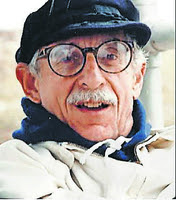
Although with the loss of David Chalmers, we have lost a precious piece of our meeting, we can be comforted in the knowledge that David left a legacy which continues to speak. Among the ways in which David's influence continues to live is through his book, And the Crooked Places Made Straight: The Struggle for Social Change in the 1960s.
David chose as the title for his book, words from the 45th chapter of Isaiah which Martin Luther King had included in his March on Washington speech. David was immersed in the civil rights movement himself, but he brought his experience as a historian and a college professor to the task of describing the forces which defined the period as well. David was looking back on the 1960's from the perspective of 2013.
Kelley Rouchka wrote a thorough review of David's book on the struggle for social change. In it Rouchka states, "Chalmers has successfully crafted an engaging and thoughtful overview of a period defined by tumultuous social change. His rendering of the New Left, particularly the later, radical strains of SDS, as a failure, is outdated, though. 'The campus and antiwar dissent,' he maintains, 'failed to create the theory and organizational means for developing a Left tradition or an enduring student political culture' (p. 68). While Chalmers sees a failing student political culture, it should be noted that this position neglects to acknowledge that SNCC, SDS, and other organizations paved an avenue of dissent for such movements as gay rights and the environmental movement."
From a news article published in the Gainesville Sun:
"Canadian-born Jean Chalmers [in the early 60's] was newly arrived in Gainesville with her history professor husband, David. Chalmers realized she was in a different world when she was walking downtown on a very rainy day sheltered by the overhang outside Rice Hardware.
“An elderly black couple was walking the other way,” she says, “and they stepped off the sidewalk into the street so I could pass."
“I went home and told David ‘I can’t live in a society like this’,” Chalmers recalls.
“And I told her,” David Chalmers says, “that we can leave or you can do something about it.” Chalmers co-founded the Gainesville Women for Equal Rights, a coalition of faculty wives and east Gainesville women. Over the course of nearly 15 years GWER campaigned to desegregate local recreational facilities, stop the segregation of black and white patients at Alachua General Hospital, shine a light on appalling housing conditions in east Gainesville and conduct black voter registration drives.
“We were unemployed faculty wives,” she laughs, “and a dangerous bunch.”
I think that David knew that he was unleashing a mighty force when he
told Jean and through her the women of Gainesville to "do something
about it."
[1] Thus saith the LORD to his anointed, to Cyrus, whose right hand I have holden, to subdue nations before him; and I will loose the loins of kings, to open before him the two leaved gates; and the gates shall not be shut;
[2] I will go before thee, and make the crooked places straight: I will break in pieces the gates of brass, and cut in sunder the bars of iron:
[3] And I will give thee the treasures of darkness, and hidden riches of secret places, that thou mayest know that I, the LORD, which call thee by thy name, am the God of Israel.
[4] For Jacob my servant's sake, and Israel mine elect, I have even called thee by thy name: I have surnamed thee, though thou hast not known me.
[5] I am the LORD, and there is none else, there is no God beside me: I girded thee, though thou hast not known me:
[6] That they may know from the rising of the sun, and from the west, that there is none beside me. I am the LORD, and there is none else.
[7] I form the light, and create darkness: I make peace, and create evil: I the LORD do all these things.
[8] Drop down, ye heavens, from above, and let the skies pour down righteousness: let the earth open, and let them bring forth salvation, and let righteousness spring up together; I the LORD have created it.
[9] Woe unto him that striveth with his Maker! Let the potsherd strive with the potsherds of the earth. Shall the clay say to him that fashioneth it, What makest thou? or thy work, He hath no hands?
[10] Woe unto him that saith unto his father, What begettest thou? or to the woman, What hast thou brought forth?
[11] Thus saith the LORD, the Holy One of Israel, and his Maker, Ask me of things to come concerning my sons, and concerning the work of my hands command ye me.
[12] I have made the earth, and created man upon it: I, even my hands, have stretched out the heavens, and all their host have I commanded.
[13] I have raised him up in righteousness, and I will direct all his ways: he shall build my city, and he shall let go my captives, not for price nor reward, saith the LORD of hosts.